One thing about me:
If I am going through something, I am going to learn deeply about it.
That is a core truth my dad instilled in me at a very young age:
“Research the sh*t out of your problems.”
And I took that personally.
My goal is always to become an expert after identifying my dysfunction.
Some people might call this a defensive mechanism.
I call it self-preservation with a Wi-Fi connection.
So yes. If I am studying neuroplasticity at 12:47pm?
Mind your business. I am evolving.
First, Let’s Clear Something Up
I still love my husband.
He is not the problem.
He is literally perfect.
(See babe? Documented proof.)
My issue — and those close to me know this — is that I am terrible at keeping my mouth shut.
Like… devastatingly bad.
With strangers? I am grace. I am poise. I am diplomacy.
With family?
FUCK decorum.
If you’re blood, you’re hearing it live and in high definition.
And here’s the complicated part:
I speak because I love.
I don’t want to regret not saying something.
I don’t want to swallow truth.
I don’t want to watch someone I love walk toward a wall when I see it coming.
But my timing?
Absolutely tragic.
Emotions get in the way of elegance.
And I laugh while I cry because I know better… but knowing better and doing better are not always the same neurological pathway.
Which brings me — dramatically, chaotically, brilliantly — to:
Neuroplasticity.
See how I did that?
My brain did six cartwheels and landed in science.
Stay with me.
Your Brain Is Not Fixed (Unfortunately for My Excuses)
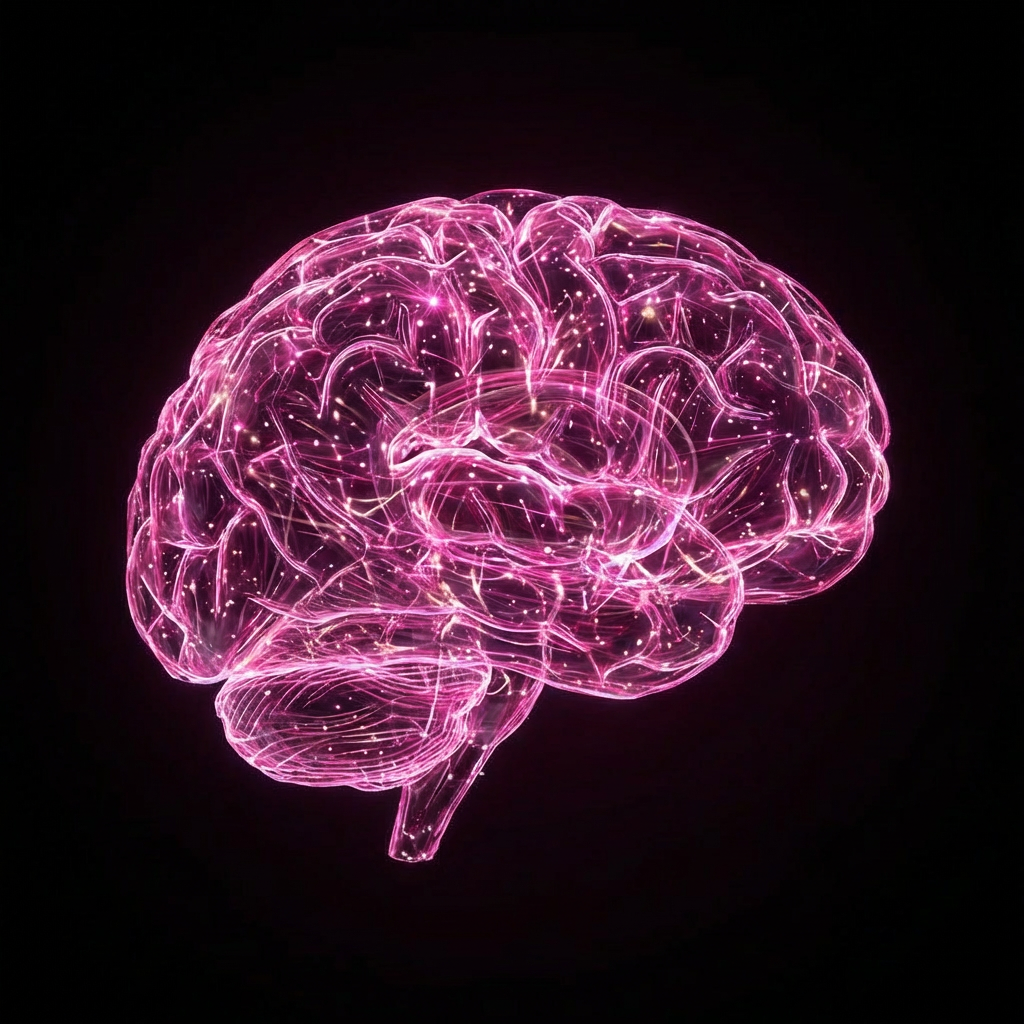
Brain plasticity — or neuroplasticity — is your brain’s ability to change, adapt, and rewire itself throughout your life.
Did you know:
Your brain is not “just the way it is.”
It is not permanently shaped by your childhood.
It is not locked into your personality.
It is moldable.
Every thought you think, every reaction you repeat, every habit you practice strengthens certain neural pathways — like trails in a forest.
The more you walk the trail, the clearer it becomes.
So when I say, “That’s just how I am,”
Neuroplasticity says,
“No ma’am. That is just the trail you’ve been walking.”
And now I am offended.
Because I was really attached to that excuse.
So Now I Have No Crutch
As I’ve been navigating a difficult personal season (because if you’re alive, you’re having problems — that’s universal), I realized I could not use my favorite fallback:
“I can’t change.”
Neuroplasticity says I can.
It means:
- I can unlearn reactive responses.
- I can build emotional regulation.
- I can become more patient.
- I can interrupt generational patterns.
- I can respond instead of react.
Even if I didn’t see it modeled.
Even if I’ve been this way for decades.
Even if my mouth moves faster than my spirit sometimes.
And honestly?
Dang it.
Now I have no excuse.
This is why therapy matters.
This is why reflection matters.
This is why growth is uncomfortable.
Because we can change.
FUCK.
Motherhood Makes This Even Wilder
Here’s the part that took me out emotionally:
Motherhood is one of the most neurologically transformative seasons of life.
There is actually a term called matrescence — the developmental transition a woman goes through when she becomes a mother. It is as neurologically significant as adolescence.
Your brain literally reshapes itself in motherhood.
So:
The overwhelm? Not weakness. Neurological overload.
The protectiveness? Brain rewiring.
The sensitivity? Brain rewiring.
The deep, irrational, life-altering love? Brain rewiring.
Motherhood expands empathy networks in the brain.
But here’s the part that made me cry:
You can intentionally shape that rewiring.
OH LORD.
Being a “Better Mom” Is Actually Brain Training
When we say we want to be better, what we really mean is:
Pause before reacting.
Speak instead of yell.
Regulate instead of explode.
Choose discipline over impulse.
Heal instead of repeat.
Neuroplasticity says:
If you practice pausing, your brain gets better at pausing.
If you practice gratitude, your brain gets better at noticing good.
If you practice calm, your nervous system learns calm.
You are not stuck with the patterns you inherited.
You are building new ones.
And that hit me.
Because this doesn’t just apply to parenting.
It applies to my marriage.
My friendships.
My family.
My mouth.
I am not broken.
I am rewiring.
3 Ways to Rewire Your Brain (No Lab Coat Required)
- The Five-Second Pause
Before responding — inhale for four seconds.
That pause builds regulation circuits.
Yes, even when someone deserves your TED Talk. - Name the Emotion
“I’m overwhelmed.”
Labeling emotions reduces activity in the amygdala (the fear center).
Science loves vocabulary. - Repetition Over Drama
Tiny daily shifts rewire more effectively than grand, theatrical declarations.
Consistency > emotional speeches.
Unfortunately.
I Did This More for Me Than You
If I’m honest, I wrote this for myself.
Because I needed to remember:
I am not doomed to repeat parent’s responses.
I am not locked into my worst reflexes.
I am not defined by my most emotional moments.
Motherhood is not just shaping my child’s brain.
It is reshaping mine.
In my parenting.
In my marriage.
In my relationships.
In the way I speak.
In the way I pause.
In the way I love.
And that means growth is always possible.
Even for me.
FUCK.
…Sigh.
But also?
Thank God.
If we are speaking rigorously, enhancing neuroplasticity is less about dramatic reinvention and more about biologically intelligent inputs. First, prioritize high-quality sleep — slow-wave and REM cycles are when synaptic pruning and consolidation occur; without sleep, learning quite literally does not “stick.” Second, engage in novel cognitive strain — not scrolling, but deep reading, language acquisition, complex problem solving — because effortful learning increases synaptic density and strengthens prefrontal circuitry. Third, regulate chronic stress; prolonged cortisol exposure impairs hippocampal plasticity, whereas breathwork and parasympathetic activation preserve it. Fourth, cultivate emotionally meaningful relationships — secure attachment and social connection stimulate oxytocin and dopaminergic pathways that enhance neural flexibility. And finally, allow yourself repetition with intention — because long-term potentiation, the cellular mechanism of learning, is built not on intensity but on consistent, deliberate rehearsal. No burpees required. Just biological respect for the exquisite organ between your ears.
Always Have, Always Will ~ Kalie
Leave a Reply